Let me start with an overview of what this content will be all about.
“Yeah, well, you know, that’s just, like, your opinion, man.” – Jeffrey “The Dude” Lebowski
Flushable wipes are one of those products that sound amazing to the rear but are an affront to any plumbing system. From inside the home or business to throughout the supporting municipality system, flushable wipes go down but never go away.
Billed as harmless as toilet paper, they are a scourge to many down the line from any toilet.
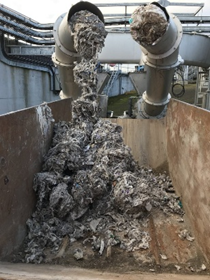
They might disappear when you stand up, all clean and ready to wash your hands. But that’s where the marketing truth ceases. As they rush downstream, pipes clog, pumps jam, sewer systems cry mercy and municipal water treatment workers look to the heavens and scream “WHY!”
Yet somehow, even with the white flag waving from municipal systems and employees, the store shelves are full of general use ones, feminine versions and masculine scrubbers.
As a professional with a team of fellow experts, flushable wipes are trash, and that’s where they belong. Granted, it’s nice to feel like you had a mini shower in the middle of the day. But those wash clothes should not go down the drain. They should go in that receptacle to the side of your sink.
It would be equivalent to flushing a paper towel, with a lovely scent, down the drain.
Flushable wipes:
- Hold together in water
- Resist breaking down
- Stay intact long enough to cause problems
They may go away. But they remain about until they find the following in a sewer line:
- Tree roots
- A hard 90-degree turn or settled bend in the line
- Small gap in the line
- Some residual grease or hair
Or maybe you have a grinder pump in your basement, watch out! We’ve replaced hundreds of grinders through the years due to “UnFlushable” wipes.
Once that wipe, and its flushed friends make it out of your system, this is when the real damage can occur. As you look down the street from manhole to manhole, that bunch of scented fiber is on its way to wreak havoc on:
- Neighborhood Sewage Pumps
- Community Lift Stations
- Township Sewer Systems
- City Water Treatment Plants
Flushable wipes have become such as an addition to the already existing material in sewer systems, a term called “ragging” has been introduced throughout the waste water industry.
“Ragging refers to the accumulation of fibrous debris—such as rags, wet wipes, hair, and stringy trash—inside a pump. This typically happens when these materials entangle around the impeller in wastewater systems, forming rope-like bundles or “rag balls.” Ragging leads to a drastic drop in pump performance by reducing flow as impeller passages become obstructed, forcing the motor to draw higher current. Eventually, the pump can become completely clogged or trip out on thermal overload due to excessive strain.
The immediate effects of ragging include pump station downtime and the risk of sewage backing up. In sewer lift stations, ragging is the leading cause of pump clogs that result in sanitary sewer overflows (SSOs). SSOs spill untreated sewage into the environment, triggering regulatory fines, costly clean-up efforts, and public health hazards. Preventing ragging is critical for maintaining system efficiency and avoiding expensive emergency interventions.
They don’t break down, so they tangle. And when they tangle, they create what the industry rightly calls ragging.”
https://homapump.com/solving-the-ragging-problem-how-non-clog-pumps-save-time-and-money/
You may think you’re doing your backside a favor with the use of Flushable Wipes. Yet, if they keep getting sent into your drain lines, the wallet in your back pocket will feel the pain.
Keep flushing America! Just not wipes.
– Lance Smith, Owner and The Man that Skis the White River Barefoot
L.D. Smith Plumbing and Drains